Cherkizovo Group has been implementing its school cafeteria renovation project for the third consecutive year as part of a social program created with an effort to improve living conditions in the regions of its presence. Previously, Cherkizovo allocated funds to renovate cafeterias in seven educational institutions in the Penza, Chelyabinsk, Orenburg, and Voronezh Regions, the Altai Territory, and Bashkortostan.
The Shirinskaya Secondary General School, an educational facility for approximately 135 children, has not seen its cafeteria renovated since an accident in 2000, when a boiler explosion damaged the floor and equipment. According to school principal Oksana Novik, the cafeteria was not used for food preparation at all in recent years, and ready-made meals were brought in thermoses. Polina Isaeva, who graduated from the school and now works there as a primary school teacher, sent her application to Cherkizovo and Smenka.
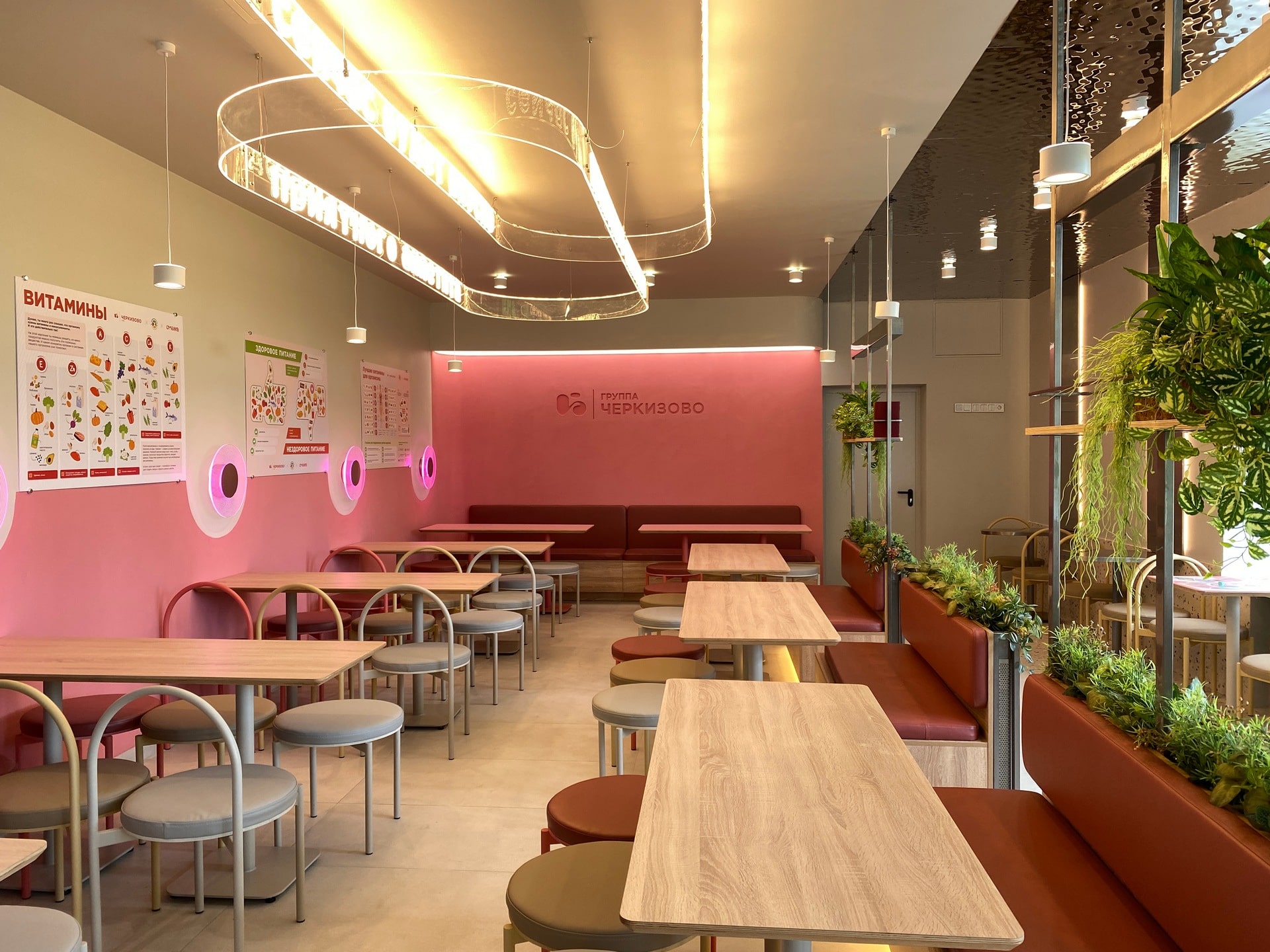
Renovation covered the kitchen and dining areas: crumbling walls and creaky floors were replaced, and modern kitchen equipment was installed, allowing the preparation of hot meals directly on-site at the school. Additionally, the cafeteria now boasts new tables and chairs, multi-level lighting, and interactive areas: two whiteboards for writing with markers and magnetic notes, as well as three tables with board games intended to reinforce the idea of proper nutrition and taking about school life. The interactive zones make the cafeteria space not only a place for eating but also into a hub for socializing.
Information boards on the cafeteria walls, developed with the support of experts from the Rospotrebnadzor's Healthy Nutrition project specifically for children, also focus on proper nutrition.
“The renovated cafeteria at Shirinskaya School is not just about students' nutrition. It is an investment in their development. We hope that the cozy and functional environment created by our colleagues from Smenka will further inspire children to socialize and study. We are grateful to the school staff for their involvement in the process, especially to Polina Isaeva, whose initiative made this renovation a reality.”